
Funnel Integration: Connecting Marketing, Sales, and Automation for Scalable Growth
Introduction: Why Funnel Integration Is a Game Changer
Modern customers do not follow a straight path before making a decision. They discover brands on one platform, research on another, and finally convert somewhere else. This complex behavior makes funnel integration essential.
Funnel integration ensures that every stage of the customer journey is connected—marketing, communication, automation, and sales all work as one system. Instead of disconnected tools and scattered data, businesses gain clarity, consistency, and control.
Without funnel integration, growth becomes unpredictable. With it, growth becomes scalable.
What Is Funnel Integration?
Funnel integration is the process of connecting all stages of a marketing and sales funnel so data, communication, and actions flow seamlessly from one stage to the next.
It links traffic sources, landing pages, lead capture systems, messaging platforms, automation tools, and sales processes into a single connected journey.
The goal is simple: remove gaps and friction from the customer experience.
Understanding the Modern Business Funnel
A funnel represents the journey a user takes from first interaction to final conversion. In modern digital marketing, this journey is rarely linear.
Customers move back and forth between awareness, consideration, and decision stages. Funnel integration ensures that no matter where the customer is, the system responds intelligently.
A connected funnel adapts to behavior.
Why Funnel Integration Matters More Than Ever
Businesses today use multiple platforms—websites, ads, messaging tools, CRMs, and analytics systems. When these tools operate separately, valuable data gets lost.
Funnel integration ensures that every interaction is tracked and used effectively. This leads to better personalization, faster follow-ups, and higher conversion rates.
Integration turns data into action.
The Cost of an Unintegrated Funnel
When funnels are not integrated, businesses face common problems. Leads fall through gaps, follow-ups are delayed, and customer experience feels inconsistent.
Marketing teams generate leads, but sales teams lack context. Automation tools send generic messages that feel irrelevant.
Disconnection kills momentum.
How Funnel Integration Improves Customer Experience
A well-integrated funnel delivers a smooth experience. Customers receive relevant messages based on their actions, not random promotions.
Each interaction feels timely and intentional. This builds trust and keeps users engaged.
Consistency creates confidence.
Key Components of Funnel Integration
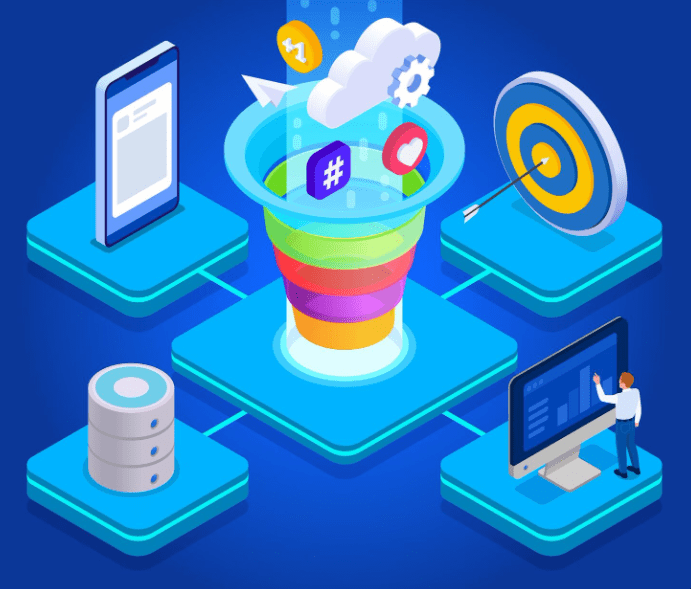
Funnel integration connects multiple systems into one flow. Traffic sources feed into landing pages, which capture leads and trigger automation.
Communication tools deliver personalized messages, while CRMs track interactions and sales activity.
Every component supports the next.
Traffic Sources and Funnel Entry Points
Funnel integration starts with traffic. Ads, search engines, social platforms, and referrals act as entry points.
Integrated tracking ensures businesses know where leads come from and how they behave next.
Visibility drives optimization.
Landing Pages as Funnel Connectors
Landing pages are critical connection points. They bridge traffic sources and lead capture.
When integrated properly, landing pages pass data directly into automation and CRM systems, triggering the next steps instantly.
Speed improves conversions.
Lead Capture and Data Flow
Lead capture forms should feed directly into connected systems. This ensures no delay between interest and response.
Integrated data flow allows immediate segmentation and personalized communication.
Real-time response matters.
Automation as the Backbone of Funnel Integration
Automation plays a central role in funnel integration. It ensures consistent follow-ups, reminders, and nurturing without manual effort.
Automation keeps the funnel moving even when teams are offline.
Systems work continuously.
Segmentation and Funnel Logic
Integrated funnels use segmentation to deliver relevant experiences. Users are grouped based on behavior, interests, or stage.
This prevents irrelevant messaging and improves engagement.
Relevance increases results.
Communication Channels Within the Funnel
Email, messaging platforms, and notifications must work together. Funnel integration ensures that communication is coordinated, not duplicated.
Customers receive messages that match their journey stage.
Harmony improves trust.
Sales Alignment Through Funnel Integration
Sales teams benefit greatly from integrated funnels. They receive leads with full context—source, behavior, and interest level.
This allows meaningful conversations instead of cold outreach.
Context improves closing rates.
CRM Integration and Funnel Visibility
CRM systems store and organize funnel data. When integrated, they provide a complete view of the customer journey.
Sales and marketing teams stay aligned with shared data.
One source of truth matters.
Analytics and Funnel Optimization
Integrated funnels provide better analytics. Businesses can track drop-offs, engagement points, and conversion triggers.
This data helps optimize each stage for better performance.
Insights drive improvement.
Funnel Integration for Lead Nurturing
Not every lead converts immediately. Integrated funnels nurture leads with relevant content and follow-ups.
This keeps the brand top-of-mind until the customer is ready.
Patience pays off.
Reducing Manual Work with Integration
Manual processes slow growth. Funnel integration reduces repetitive tasks and errors.
Teams focus on strategy instead of operations.
Efficiency fuels scale.
Funnel Integration Across Multiple Platforms
Modern funnels span multiple platforms. Integration ensures consistency across devices and channels.
Customers experience one brand, not disconnected systems.
Unity strengthens branding.
Common Funnel Integration Challenges
Integration requires planning. Poor setup can lead to data mismatches or automation errors.
Choosing compatible tools and testing workflows is essential.
Preparation prevents problems.
Best Practices for Successful Funnel Integration
Start with clear funnel goals. Map the customer journey before integrating tools.
Test automation workflows and monitor performance regularly.
Structure ensures success.
Security and Data Management in Integrated Funnels
Data security is critical. Integrated systems should follow privacy standards and protect customer information.
Trust depends on safety.
Scalability Through Funnel Integration
Integrated funnels are built to scale. As traffic increases, systems handle volume without breaking.
Growth becomes predictable and manageable.
Scalability is strategic.
Future of Funnel Integration
Funnel integration is evolving with AI-driven personalization and predictive automation.
Businesses that invest early gain a competitive edge.
The future is connected.
Frequently Asked Questions (FAQs)
- What is funnel integration?
Funnel integration connects all stages of marketing and sales into one seamless system. - Why is funnel integration important?
It improves customer experience, reduces lead loss, and increases conversions. - Does funnel integration require automation?
Yes, automation is a key component for consistency and scale. - Can small businesses use funnel integration?
Yes, even simple integrations can significantly improve efficiency. - How does funnel integration help sales teams?
It provides context-rich leads and smoother handovers.
Conclusion
Funnel integration is no longer optional for growing businesses. It connects tools, teams, and data into a unified journey that customers can trust.
By eliminating gaps and delays, funnel integration improves experience, efficiency, and conversions. Businesses that integrate their funnels operate smarter, scale faster, and build stronger relationships.
In today’s competitive digital landscape, connected funnels win.
Ready to Master Digital Marketing? Sign Up Today!
Inspiring Job Placement Success Stories

Our Achievers Ready to Lead the Industry