Conversion Rate Optimization (CRO): The Ultimate In-Depth Guide to Maximizing Website Performance
Introduction
Getting visitors to a website is expensive and time-consuming. Businesses invest heavily in SEO, paid advertising, social media, and content marketing to drive traffic. However, traffic alone does not guarantee growth. If visitors arrive and leave without taking action, marketing efforts lose their true value.
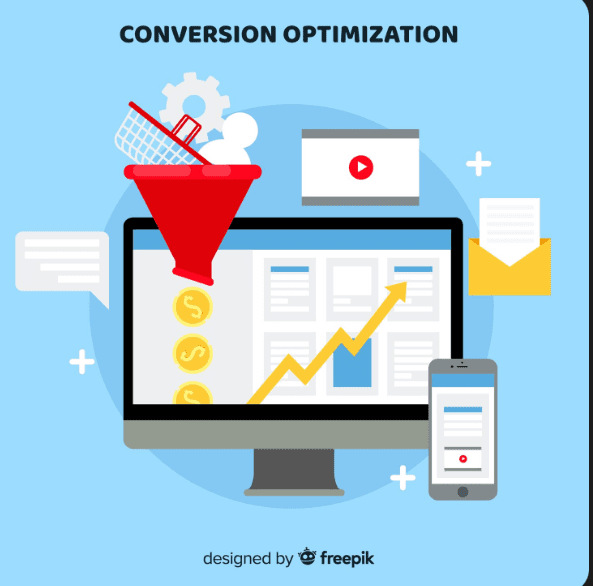
This is where Conversion Rate Optimization (CRO) plays a critical role. CRO focuses on improving how a website performs by increasing the percentage of visitors who take meaningful actions. Instead of chasing more traffic, CRO helps businesses generate more results from the same audience.
This in-depth guide explains Conversion Rate Optimization from fundamentals to advanced strategies in a clear, practical, and easy-to-understand way.
What Is Conversion Rate Optimization?
Conversion Rate Optimization is a structured, data-driven process aimed at increasing the percentage of website visitors who complete a desired action. These actions are known as conversions.
A conversion can vary depending on business goals. For an eCommerce website, it may be a completed purchase. For a SaaS product, it could be a free trial signup. For service-based businesses, conversions often include contact form submissions, phone calls, or appointment bookings.
CRO identifies friction points in the user journey and removes obstacles that prevent users from converting.
Understanding Conversion Rate
The conversion rate is calculated using a simple formula:
Conversion Rate = (Total Conversions ÷ Total Visitors) × 100
For example, if 1,000 users visit a website and 30 complete a purchase, the conversion rate is 3%. CRO focuses on increasing this percentage through continuous optimization.
Why Conversion Rate Optimization Is Important
Many businesses focus only on traffic growth, assuming more visitors will automatically lead to more sales. In reality, even high-traffic websites can fail if the user experience is poor.
CRO helps businesses increase revenue without increasing marketing budgets. It improves user experience, builds trust, and aligns website content with user intent. Even small improvements in conversion rates can produce significant long-term revenue growth.
Additionally, CRO provides valuable insights into customer behavior, preferences, and decision-making patterns.
How Conversion Rate Optimization Works
CRO is a continuous cycle rather than a one-time activity. The process begins with data collection through analytics tools, heatmaps, session recordings, and user feedback.
After analyzing this data, marketers identify potential problem areas such as high bounce rates, abandoned forms, or confusing navigation. Hypotheses are created about why users behave a certain way, and changes are designed to address those issues.
These changes are tested using A/B testing or multivariate testing. Results are measured, and successful variations are implemented permanently. The process then repeats, leading to ongoing improvements.
Types of Conversions
Conversions can be categorized into macro and micro conversions. Macro conversions represent primary business goals, such as purchases or lead submissions. Micro conversions include actions like adding a product to the cart, clicking a call-to-action button, or spending time on key pages.
Tracking both types provides a deeper understanding of the customer journey and helps predict future conversions.
Conversion Rate Optimization and User Psychology
Effective CRO is deeply connected to human psychology. Users make decisions based on trust, clarity, emotion, and perceived value.
Factors such as social proof, urgency, simplicity, and visual hierarchy influence how users interact with a website. Reducing cognitive load, eliminating distractions, and clearly communicating value propositions can significantly improve conversion rates.
Understanding user intent and emotional triggers is essential for successful optimization.
Key Elements of a High-Converting Website
A high-converting website communicates its value clearly within seconds. Headlines should immediately explain what the business offers and how it solves user problems.
Call-to-action buttons must be visible, persuasive, and action-oriented. Page speed, mobile responsiveness, and intuitive navigation reduce friction and frustration.
Trust signals such as testimonials, reviews, security badges, and guarantees help users feel confident in taking action. Forms should be simple and request only essential information.
Role of User Behavior Data in CRO
User behavior tracking is the foundation of conversion optimization. By analyzing how users scroll, click, hesitate, and abandon pages, businesses gain insights into hidden obstacles.
Behavior data reveals which elements attract attention and which create confusion. Decisions based on real user interactions are far more effective than assumptions.
Tools Used for Conversion Rate Optimization
Several tools support CRO efforts. Google Analytics 4 helps track conversions, funnels, and engagement metrics. Google Tag Manager enables advanced tracking without repeated code changes.
Heatmap and session recording tools such as Hotjar and Microsoft Clarity visualize user behavior. A/B testing tools like Optimizely, VWO, and other experimentation platforms allow businesses to test design and content changes scientifically.
Combining multiple tools provides a complete view of user behavior and conversion performance.
Conversion Rate Optimization and SEO
CRO and SEO are closely connected. SEO attracts users, while CRO ensures those users convert.
Optimizing content structure, improving readability, enhancing page speed, and aligning content with search intent improve both conversion rates and SEO performance. Search engines reward websites that provide positive user experiences.
Best Practices for Conversion Rate Optimization
A successful CRO begins with clear goals and measurable KPIs. Testing should always be based on data rather than opinions or design preferences.
Changes should be tested systematically, focusing on one variable at a time. Continuous monitoring and regular audits help maintain accuracy and prevent performance decline.
CRO works best when supported by collaboration between marketing, design, and development teams.
Common CRO Mistakes to Avoid
One common mistake is focusing only on design changes without understanding user intent. Another issue is running tests without sufficient traffic or statistical significance.
Ignoring mobile users, page speed, accessibility, and trust elements often results in poor conversion performance. CRO should always prioritize user needs.
Future of Conversion Rate Optimization
The future of CRO lies in personalization, artificial intelligence, and privacy-first analytics. Websites will increasingly deliver tailored experiences based on user behavior and preferences.
As data privacy regulations evolve, ethical and transparent optimization practices will become even more important. Businesses that adapt early will gain a competitive advantage.
Frequently Asked Questions (FAQs)
1. What is Conversion Rate Optimization?
Conversion Rate Optimization is the process of improving a website to increase the percentage of visitors who complete desired actions.
2. How long does CRO take to show results?
Results vary based on traffic and testing strategy, but improvements often appear within weeks.
3. Is CRO expensive?
CRO is cost-effective because it increases results without increasing traffic spend.
4. Is CRO useful for small businesses?
Yes, even small improvements can have a significant impact on revenue.
5. Does CRO help SEO?
Yes, better user experience and engagement indirectly support SEO performance.
Conclusion
Conversion Rate Optimization is one of the most powerful growth strategies in digital marketing. By understanding user behavior, applying psychology, and testing improvements systematically, CRO transforms traffic into tangible results.
When implemented correctly, CRO not only increases conversions but also improves user satisfaction, brand trust, and long-term business growth.
Ready to Master Digital Marketing? Sign Up Today!
Inspiring Job Placement Success Stories

Our Achievers Ready to Lead the Industry