
A/B Testing: Word Guide to Experimentation, CRO, and Growth
Introduction
Digital growth is no longer driven by opinions, instincts, or design trends alone. In a highly competitive online environment, even small decisions—such as button text, headline wording, or layout changes—can significantly impact conversions and revenue. This is where A/B Testing becomes indispensable.
A/B testing allows businesses to replace assumptions with evidence. Instead of guessing what users prefer, companies can test ideas on real visitors and measure actual performance. Over time, this approach leads to consistent improvement, lower risk, and sustainable growth.
This guide is a long-form, highly detailed, SEO-friendly, and copyright-free resource designed to explain A/B testing from absolute basics to advanced experimentation strategies.
What Is A/B Testing?
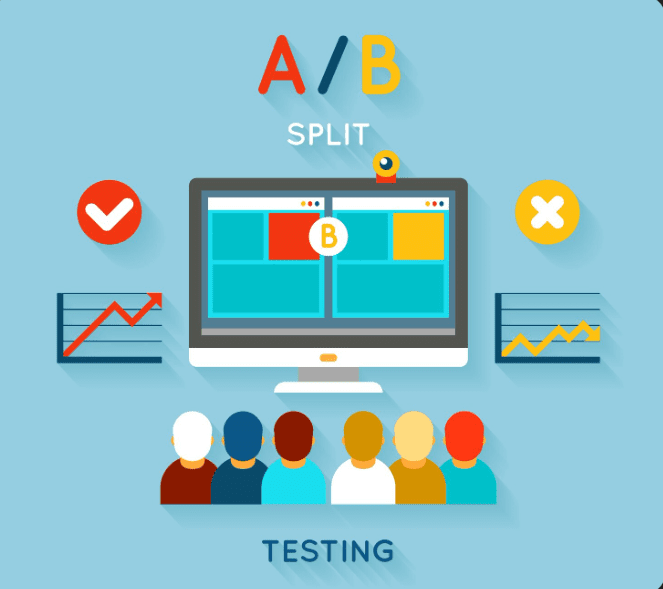
A/B testing, also known as split testing, is an experimentation method where two versions of a digital asset are compared to determine which one performs better. Version A is the control (original), while version B is the variation with a single, intentional change.
Users are randomly divided between the two versions, and their behavior is measured against predefined goals. The version that produces better results becomes the winner.
The strength of A/B testing lies in its simplicity. By changing one variable at a time, businesses can clearly understand cause and effect.
The Evolution of A/B Testing
A/B testing originated in scientific experimentation and statistical analysis long before digital marketing existed. Over time, it was adopted by direct marketers, product teams, and eventually digital businesses.
Today, A/B testing is a core practice in CRO, UX design, SaaS growth, and eCommerce optimization. With advanced tools and analytics, testing has become faster, more accurate, and more accessible than ever.
Why A/B Testing Is Critical for Online Success
User behavior is unpredictable. What seems logical to a designer or marketer may not resonate with actual users. A/B testing removes bias and reveals real preferences.
It helps improve conversion rates, engagement, and usability while reducing the risk of negative changes. Instead of rolling out major updates blindly, businesses can validate ideas before full implementation.
Over time, continuous testing creates a culture of learning and optimization.
How A/B Testing Works Step by Step
The A/B testing process begins with identifying an opportunity. This could be a page with low conversions, a high bounce rate, or poor engagement.
A hypothesis is then created, explaining what change might improve performance and why. A variation is built, traffic is split, and user behavior is tracked.
Once enough data is collected, results are analyzed using statistical methods. If the test is statistically significant, the winning version is implemented.
A/B Testing vs Split Testing vs Multivariate Testing
A/B testing and split testing are often used interchangeably and usually mean the same thing. Multivariate testing, however, tests multiple variables simultaneously.
While multivariate testing can provide deeper insights, it requires significantly higher traffic and more complex analysis. A/B testing remains the most practical and widely used method for most businesses.
What Can Be Tested Using A/B Testing?
Almost every element of a website or app can be tested. Headlines are commonly tested to improve clarity and value communication. Call-to-action buttons are tested for wording, placement, size, and color.
Other testable elements include page layouts, navigation menus, images, pricing displays, trust signals, forms, onboarding flows, and checkout processes.
Even small changes can produce meaningful results when tested systematically.
A/B Testing and User Psychology
Understanding user psychology dramatically improves test quality. Users respond to simplicity, trust, urgency, and emotional triggers.
Principles such as social proof, scarcity, loss aversion, and visual hierarchy often influence decision-making. Tests that align with these principles tend to perform better.
Strong hypotheses are based on behavioral insights rather than random ideas.
A/B Testing for Conversion Rate Optimization (CRO)
A/B testing is the backbone of CRO. While CRO defines the goal of improving performance, A/B testing provides the method to achieve it.
By continuously testing and refining website elements, businesses can reduce friction, increase clarity, and guide users toward conversion actions more effectively.
Long-term CRO success depends on consistent experimentation rather than one-time improvements.
A/B Testing and SEO: How They Work Together
A/B testing does not directly improve rankings, but it strongly supports SEO by improving user experience and engagement.
Higher dwell time, better interaction rates, and improved satisfaction signals all contribute indirectly to stronger SEO performance. When implemented correctly, A/B testing does not violate search engine guidelines.
Tools Used for A/B Testing
A/B testing relies on a combination of analytics, experimentation, and behavior-tracking tools. Google Analytics 4 is commonly used to measure conversions and user journeys. Google Tag Manager simplifies test deployment.
Dedicated experimentation platforms such as Optimizely, VWO, and Adobe Target allow advanced testing and personalization. Heatmap tools like Hotjar and Microsoft Clarity provide qualitative insights that support test ideas.
Building a Winning A/B Testing Strategy
A successful testing strategy starts with clear goals and KPIs. Tests should be prioritized based on impact, traffic volume, and ease of implementation.
Documentation is critical. Recording hypotheses, results, and learnings prevents repeated mistakes and helps teams scale experimentation.
Consistency and patience are essential for reliable outcomes.
Understanding Statistical Significance
Statistical significance ensures that test results are not due to random chance. Ending tests too early often leads to false winners.
Tests should run long enough to capture variations in traffic and behavior. Confidence levels help determine whether a result is trustworthy.
Common A/B Testing Mistakes
Many businesses test without a clear hypothesis, leading to meaningless results. Others stop tests prematurely or test too many elements at once.
Ignoring mobile users, seasonality, or external influences can distort data. A disciplined approach is required for success.
Real-World A/B Testing Examples
E-commerce companies test checkout flows, pricing displays, and product imagery. SaaS businesses test onboarding messages, free trial pages, and feature positioning.
Content websites test headlines, article layouts, and lead magnets to improve engagement and subscriptions.
A/B Testing at Scale
As businesses mature, testing becomes more structured and strategic. Experimentation roadmaps, dedicated teams, and automation help scale testing efforts.
Advanced organizations treat A/B testing as a continuous growth engine rather than a tactical activity.
The Future of A/B Testing
The future of A/B testing lies in AI-driven experimentation, personalization, and privacy-first data collection. Tests will increasingly adapt in real time based on user behavior.
Ethical data usage and consent-based experimentation will become standard practices.
Frequently Asked Questions (FAQs)
1. What is A/B testing?
A/B testing compares two versions of a page to identify which performs better.
2. How long should an A/B test run?
Until statistical significance is achieved, usually one to four weeks.
3. Is A/B testing suitable for small websites?
Yes, but tests should focus on high-impact elements and run longer.
4. Can A/B testing hurt SEO?
No, when implemented correctly using proper tools.
5. What is the biggest benefit of A/B testing?
It enables data-driven decision-making and reduces risk.
Conclusion
A/B testing transforms digital optimization into a scientific process. By testing ideas instead of assuming outcomes, businesses gain clarity, confidence, and control over growth.
When combined with CRO, user behavior tracking, and analytics, A/B testing becomes one of the most powerful tools for long-term digital success.
Ready to Master Digital Marketing? Sign Up Today!
Inspiring Job Placement Success Stories

Our Achievers Ready to Lead the Industry