Introduction
In today’s digital world, businesses compete for visibility on search engines every day. Whether you own a business, run a blog, manage a website, or work as a digital marketer, appearing in search results is essential for success. However, achieving high rankings on search engines is not possible without understanding what users are searching for online.
This is where keyword research becomes important.
Keyword research is the foundation of Search Engine Optimization (SEO). It helps businesses identify the exact words and phrases people type into search engines while looking for products, services, information, or solutions. By targeting the right keywords, websites can attract relevant visitors, improve rankings, and increase conversions.
For students, professionals, and aspiring digital marketers, learning keyword research has become one of the most valuable digital skills. It is a core part of SEO and plays a significant role in content marketing, blogging, website optimization, and online business growth.
Institutes like Web Liquids Institute help learners understand SEO concepts through practical training and industry-focused learning, making it easier to develop real-world digital marketing skills.
What is Keyword Research?
Keyword research is the process of finding and analyzing the search terms people use on search engines like Google, Bing, and Yahoo.
The main goal is to understand:
- What users are searching for
- How often they search for it
- How competitive the keyword is
- Whether the keyword matches your business or content goals
For example, if someone owns a digital marketing training institute, they may want to rank for keywords such as:
- Digital marketing course
- SEO training
- Content marketing course
- PPC training
- Social media marketing classes
By identifying these search terms, businesses can create relevant content that matches user intent and attracts targeted traffic.
How to Do Keyword Research
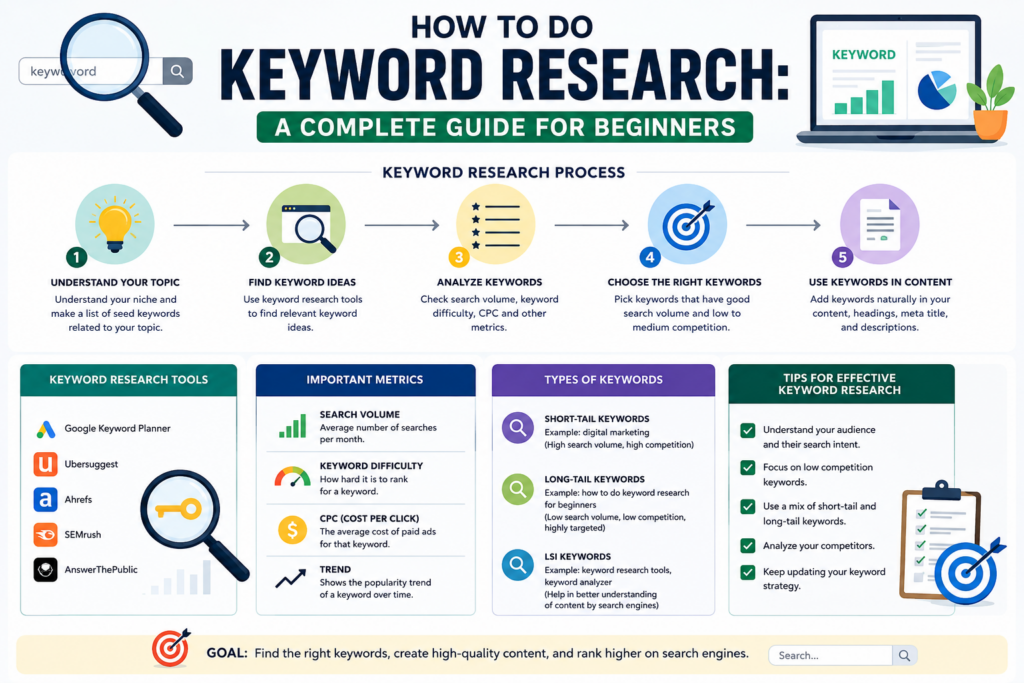
Understanding how to do keyword research is one of the first steps in building a successful SEO strategy. The process may seem technical initially, but it becomes simple when broken into manageable steps.
Step 1: Understand Your Niche
Start by identifying your industry, products, services, or expertise.
Ask yourself:
- What problems do my customers face?
- What information are they searching for?
- What services do I offer?
The answers help generate keyword ideas that align with your target audience.
Example
If you run a training institute, potential keywords may include:
- SEO course
- Digital marketing training
- Google Ads classes
- WordPress training
- Content marketing certification
Step 2: Create a List of Seed Keywords
Seed keywords are basic terms related to your niche.
Examples:
These keywords act as the starting point for deeper research.
Step 3: Use Keyword Research Tools
Keyword research tools help discover:
- Search volume
- Competition level
- Related keywords
- User intent
- Ranking difficulty
These insights help marketers choose the most effective keywords.
Step 4: Analyze Search Intent
Search intent refers to the reason behind a search query.
There are four major types:
Informational
Users seek information.
Example:
Navigational
Users search for a specific website.
Example:
Commercial
Users compare options before making a decision.
Example:
- Best SEO course in Chandigarh
Transactional
Users intend to take action.
Example:
Understanding intent improves content relevance and SEO performance.
Step 5: Focus on Long-Tail Keywords
Long-tail keywords contain three or more words and are usually less competitive.
Examples:
Benefits include:
- Higher conversion rates
- Easier rankings
- More targeted traffic
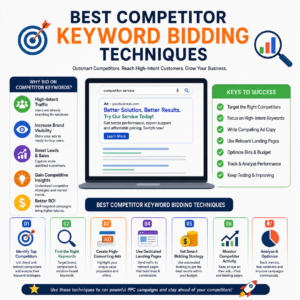
Step 6: Analyze Competitor Keywords
Study competitor websites to understand:
- Which keywords they rank for
- Their content strategy
- Ranking opportunities
Competitor analysis helps identify gaps and new keyword opportunities.
Step 7: Prioritize Keywords
After collecting keywords, prioritize them based on:
- Search volume
- Competition
- Relevance
- User intent
- Business goals
This creates a focused and effective SEO strategy.
Best Keyword Research Tools
Choosing the right tools makes keyword research faster and more accurate.
Google Keyword Planner
Google’s free keyword research tool provides:
- Search volume data
- Keyword suggestions
- Competition metrics
Ideal for beginners and advertisers.
Ahrefs
Ahrefs is widely used by SEO professionals.
Features include:
- Keyword difficulty analysis
- Competitor research
- Content opportunities
- Backlink insights
SEMrush
SEMrush offers comprehensive SEO and marketing features.
Benefits:
- Keyword tracking
- Competitor analysis
- Site audits
- Content research
Ubersuggest
A beginner-friendly SEO tool.
Provides:
- Keyword suggestions
- Search volume
- SEO difficulty
- Content ideas
Google Trends
Google Trends helps identify:
- Trending searches
- Seasonal keywords
- Regional interest
Useful for content planning.
AnswerThePublic
This tool generates keyword ideas based on user questions.
Examples:
- What is keyword research?
- Why is keyword research important?
- How can beginners learn SEO?
Why Keyword Research is Important
Keyword research is more than just finding popular search terms. It helps businesses connect with their audience effectively.
Improves Search Engine Rankings
Targeting relevant keywords increases the chances of appearing in search results.
Higher rankings lead to:
- More visibility
- Increased traffic
- Better brand awareness
Understands Customer Behavior
Keyword research reveals:
- User interests
- Search patterns
- Customer needs
This information supports better marketing decisions.
Creates Better Content
When content is based on user searches, it becomes more useful and relevant.
Benefits include:
- Higher engagement
- Lower bounce rates
- Better user experience
Increases Website Traffic
Relevant keywords attract qualified visitors who are genuinely interested in the topic or service.
Supports Business Growth
Businesses can identify:
- New opportunities
- Market demand
- Customer trends
This helps improve marketing ROI.
Industry Relevance of Keyword Research
Every industry relies on search engines to attract customers.
Industries using keyword research include:
- E-commerce
- Education
- Healthcare
- Real Estate
- Finance
- Information Technology
- Hospitality
- Media and Entertainment
Companies invest heavily in SEO because search traffic remains one of the most cost-effective marketing channels.
As digital transformation continues, keyword research remains a critical skill across industries.
Career Relevance of Keyword Research
Keyword research is a core skill for several digital marketing careers.
Professionals who use keyword research include:
- SEO Specialists
- Content Writers
- Digital Marketing Executives
- PPC Experts
- Content Strategists
- Website Managers
- Bloggers
- Marketing Analysts
Learning how to do keyword research helps professionals improve campaign performance and achieve measurable business results.
Industry Demand for Keyword Research Skills
Businesses increasingly seek professionals who can improve online visibility.
Reasons for growing demand:
- Expansion of digital businesses
- Growth of online marketing
- Increased competition on search engines
- Rising importance of content marketing
Organizations want professionals who understand:
- SEO strategy
- Keyword planning
- Search behavior analysis
- Content optimization
As a result, keyword research skills are highly valued in the job market.
Future Scope of Keyword Research
The future of keyword research remains strong because search engines continue evolving.
Emerging trends include:
AI-Powered Search
Artificial Intelligence is changing how search engines understand user intent.
Marketers must focus on:
- Semantic keywords
- User-focused content
- Conversational searches
Voice Search Optimization
People increasingly use voice assistants.
Examples:
- Google Assistant
- Siri
- Alexa
This creates opportunities for natural-language keyword targeting.
Content Personalization
Search engines increasingly prioritize personalized experiences.
Keyword strategies must align with:
- User behavior
- Search intent
- Audience preferences
Data-Driven Marketing
Businesses rely on analytics and search data for decision-making.
Keyword research remains central to this approach.
As digital marketing expands globally, professionals with SEO and keyword research expertise will continue to enjoy strong career opportunities.
How Webliquids Institute Helps
Web Liquids Institute focuses on practical digital marketing education designed to prepare learners for real-world industry requirements.
Students gain hands-on exposure to SEO techniques, including keyword research, content optimization, and search engine strategies.
Industry-Oriented Curriculum
The curriculum is designed according to current market requirements.
Key learning areas include:
- Search Engine Optimization
- Keyword Research
- On-Page SEO
- Off-Page SEO
- Technical SEO
- Content Marketing
- Google Analytics
- Social Media Marketing
- Google Ads
Students learn skills that employers actively seek.
Practical Training Approach
Learning is most effective when combined with practical implementation.
Students receive opportunities to:
- Work on live projects
- Analyze websites
- Conduct keyword research
- Create SEO strategies
- Optimize content
This practical exposure helps build confidence and industry readiness.
Real-World Experience
Instead of focusing only on theory, Web Liquids Institute encourages practical learning through:
- Case studies
- Industry examples
- Website audits
- SEO tools training
- Project-based assignments
This approach helps learners understand how SEO works in real business environments.
Who Should Enroll?
Keyword research and SEO training are beneficial for a wide range of learners.
Students
Students can gain valuable digital skills and improve employability before entering the workforce.
Benefits include:
- Career preparation
- Practical experience
- Digital marketing knowledge
Working Professionals
Professionals looking to switch careers or upgrade skills can benefit significantly.
Advantages include:
- Career advancement
- Better job opportunities
- Industry-relevant expertise
Entrepreneurs
Business owners can learn how to improve website visibility and attract customers organically.
Creators and Freelancers
Bloggers, YouTubers, content creators, and freelancers can use keyword research to:
- Increase audience reach
- Improve content performance
- Generate more traffic
Benefits of Learning at Web Liquids Institute
Skill Development
Students develop practical skills in:
- SEO
- Keyword Research
- Content Optimization
- Analytics
- Digital Marketing
Career Growth
Learning SEO creates opportunities across multiple industries.
Professionals can pursue:
- Full-time jobs
- Freelancing projects
- Remote opportunities
Job Readiness
Hands-on learning ensures students are prepared for real workplace challenges.
They gain experience with:
- SEO tools
- Website optimization
- Digital marketing campaigns
Creative and Technical Advantages
SEO combines creativity and analytical thinking.
Students learn:
- Content planning
- Data analysis
- Search optimization
- Marketing strategy
These skills are valuable across many professional roles.
Career Opportunities After Completion
After mastering keyword research and SEO, learners can pursue various career paths.
Job Roles
Popular job profiles include:
- SEO Executive
- SEO Analyst
- Digital Marketing Executive
- Content Strategist
- SEO Specialist
- Search Marketing Executive
- Website Optimization Expert
- Content Marketing Executive
Freelancing Opportunities
Freelancers can offer services such as:
- Keyword research
- SEO audits
- Content optimization
- Website SEO consulting
Many businesses hire freelance SEO professionals globally.
Industry Sectors
SEO professionals are needed across:
- IT Companies
- Marketing Agencies
- E-commerce Businesses
- Educational Institutions
- Startups
- Healthcare Organizations
- Real Estate Firms
- Media Companies
The versatility of SEO skills creates long-term career stability.
Web Liquids Institute Details
If you want to build strong SEO and digital marketing skills, Web Liquids Institute provides practical learning opportunities designed for beginners and professionals alike.
Address
SCO 114-115, 2nd Floor, Sector 34-A, Chandigarh, 160022
Phone Number
8298295419
Website
https://www.webliquids.com
Students receive industry-focused training, practical assignments, and real-world exposure to help them build successful careers in digital marketing.
Conclusion
Keyword research is the foundation of every successful SEO strategy. It helps businesses understand user behavior, create relevant content, improve search rankings, and attract targeted traffic. As digital marketing continues to evolve, professionals who understand how search engines work and how users search online will remain in high demand.
Learning how to do keyword research is an essential step for anyone interested in SEO, content marketing, blogging, freelancing, or digital marketing careers. With the growing importance of online visibility, keyword research skills provide long-term career value and business advantages.
Web Liquids Institute helps students, professionals, entrepreneurs, and freelancers gain practical SEO expertise through industry-oriented training, real-world projects, and hands-on learning experiences. Whether your goal is career growth, freelancing, or business success, learning keyword research can open the door to numerous opportunities in the digital world.
FAQs
1. What is keyword research in SEO?
Keyword research is the process of finding the search terms people use on search engines to discover information, products, or services online.
2. Why is keyword research important?
It helps improve search rankings, attract relevant traffic, understand user intent, and create better content strategies.
3. How long does it take to learn keyword research?
Most beginners can learn the basics within a few weeks, while advanced SEO skills require consistent practice and project work.
4. Which tool is best for keyword research?
Popular tools include Google Keyword Planner, Ahrefs, SEMrush, Ubersuggest, Google Trends, and AnswerThePublic.
5. Can students learn keyword research?
Yes. Students can easily learn keyword research and use it to build careers in SEO and digital marketing.
6. Is keyword research a good career skill?
Yes. It is one of the most in-demand skills in digital marketing and is widely used by businesses worldwide.
7. Who can join SEO training at Web Liquids Institute?
Students, working professionals, entrepreneurs, freelancers, bloggers, and content creators can enroll.
8. What career opportunities are available after learning SEO?
You can work as an SEO Executive, SEO Analyst, Digital Marketing Executive, Content Strategist, or freelance SEO consultant.
9. Does Web Liquids Institute provide practical training?
Yes. Students receive practical exposure through live projects, case studies, website analysis, and SEO tool training.
10. What are the eligibility requirements for learning SEO?
There are no strict eligibility requirements. Anyone interested in digital marketing and online marketing can start learning SEO.