



How to Optimize Images for SEO: Complete Beginner to Advanced Guide
How to Optimize Images for SEO: Complete Beginner to Advanced Guide Introduction Images play a crucial role in modern websites. Whether you run an e-commerce
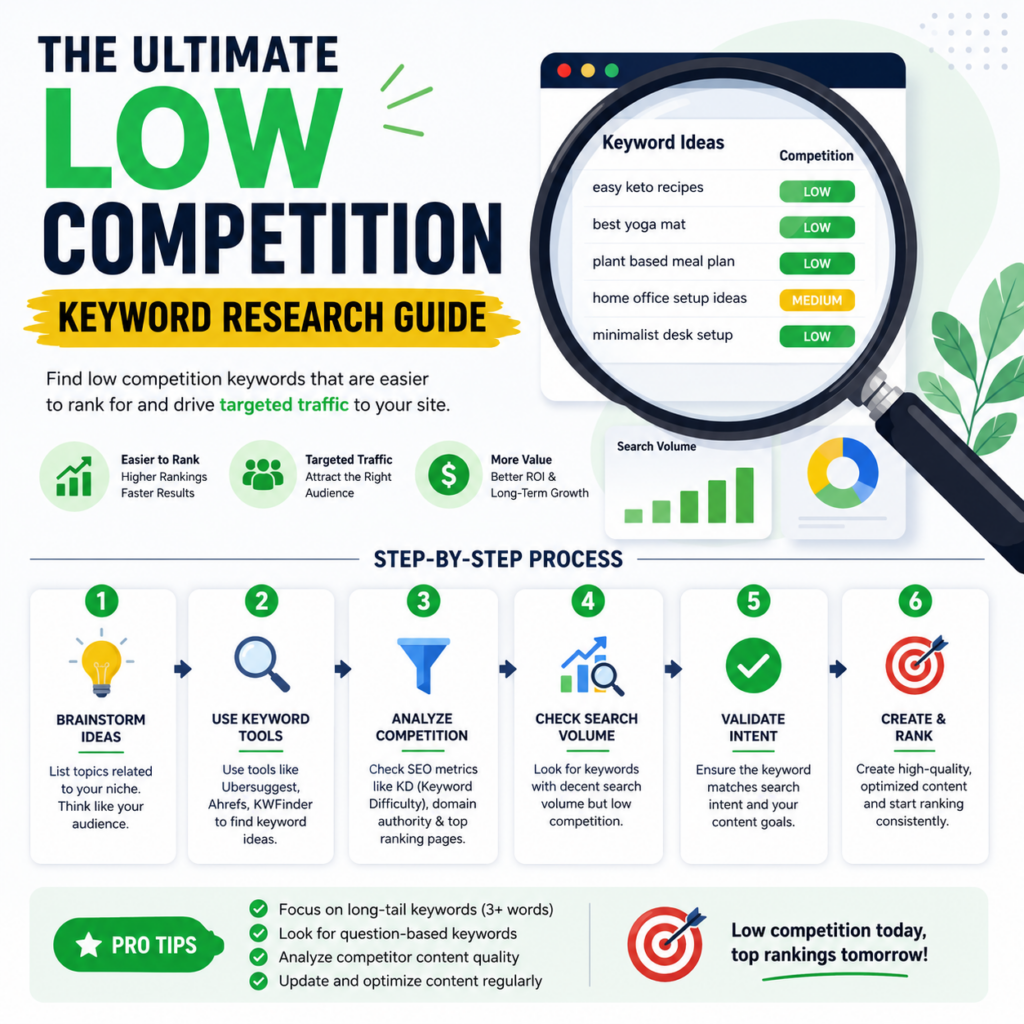
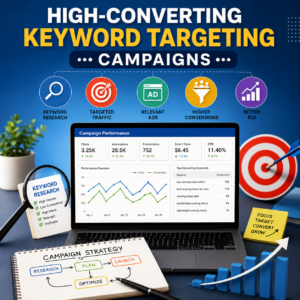
Keyword research is the foundation of every successful SEO campaign. No matter how valuable your content is, it becomes difficult to rank if you target highly competitive search terms dominated by established websites. This is why businesses, marketers, bloggers, and SEO professionals focus on discovering keywords that offer ranking opportunities with manageable competition.
Finding the right keywords allows websites to attract targeted visitors, increase organic traffic, improve conversion rates, and build authority within a niche. Instead of competing against large brands for broad keywords, smart marketers often focus on niche-specific search queries that are easier to rank for and more likely to attract qualified audiences.
Understanding How to find low competition keywords is an essential skill in modern digital marketing. Whether you own an e-commerce store, run a local business, manage a blog, or work as an SEO specialist, mastering keyword research can significantly improve your online visibility and marketing results.
This guide explains everything you need to know about low competition keywords, including their importance, types, research methods, tools, practical applications, and future relevance in the SEO industry.
Low competition keywords are search terms that have relatively fewer websites competing for top positions in search engine results. These keywords often provide better opportunities for new websites and smaller businesses to achieve rankings without investing heavily in SEO campaigns.
They typically have:
For example:
High Competition Keyword:
Low Competition Keyword:
The second keyword is more specific and easier to target effectively.
Low competition keywords generally share several characteristics:
These characteristics make them highly valuable for SEO campaigns.
Search engines analyze hundreds of ranking factors when displaying search results. When fewer websites target a keyword, the competition level decreases.
For example:
A fitness blog may struggle to rank for:
However, it may successfully rank for:
The more specific keyword attracts users looking for a precise solution while facing significantly less competition.
As a result:
Low competition keyword targeting provides significant advantages for businesses and marketers.
Some major benefits include:
Businesses can benefit by:
Modern digital marketing relies heavily on targeted traffic. Low competition keywords help marketers:
Professionals skilled in keyword research are in demand across:
Low competition keyword research is used in:
Long-tail keywords contain multiple words and target specific user intent.
Example:
Benefits:
Local keywords focus on geographic locations.
Example:
These keywords help local businesses attract nearby customers.
Users frequently search using questions.
Example:
These keywords are excellent for blog content and featured snippets.
These indicate purchasing intent.
Example:
Such keywords often generate higher conversions.
These target a focused audience segment.
Example:
Competition is usually lower compared to broad industry keywords.
Start by identifying:
Example:
A digital marketing institute may target:
Understanding audience intent improves keyword selection.
Create a list of broad topics.
Examples:
These become the starting point for deeper research.
Keyword tools reveal:
Gather as many relevant suggestions as possible.
Search intent determines why users perform searches.
Common intents include:
Example:
Matching content with intent improves rankings.
Keyword difficulty indicates ranking challenges.
Look for:
These often represent strong opportunities.
Analyze competing websites to identify:
This process often uncovers valuable keyword ideas.
Many SEO experts recommend prioritizing long-tail phrases.
For example:
Instead of:
Target:
Long-tail terms generally offer easier ranking opportunities.
After selecting keywords:
Content quality remains essential regardless of keyword competition.
Useful for:
Provides:
Helps identify:
Excellent for discovering:
Popular for:
Provides:
Useful for:
Easy-to-use interface for:
A browser extension that displays:
These tools simplify learning for beginners.
Keyword research plays a critical role across multiple industries.
Online stores use keywords to:
Example:
A shoe retailer may target specific buying keywords rather than broad terms.
Healthcare organizations use keyword research to:
Example:
Articles about symptoms, treatments, and wellness topics.
Educational institutions target keywords related to:
Example:
Students searching for digital marketing courses.
Real estate businesses optimize for:
Example:
Apartments for sale in Chandigarh.
Travel companies target:
Example:
Budget travel destinations in India.
Technology companies use keyword research for:
Example:
CRM software for startups.
Financial institutions create content around:
These topics generate substantial search demand.
Startups use keyword targeting to:
Limited budgets make SEO especially valuable.
Local businesses focus on geographic search terms.
Examples include:
Location-based optimization improves local visibility.
Agencies rely on keyword research for:
It remains one of the most important SEO activities.
Keyword research continues to evolve as search engines become more intelligent.
Businesses increasingly recognize the value of SEO.
This creates strong demand for professionals skilled in:
Artificial intelligence is transforming SEO by helping marketers:
AI tools improve efficiency while reducing manual effort.
Emerging trends include:
These developments are shaping modern SEO strategies.
Automation tools now assist with:
Professionals who combine automation with strategic thinking will remain highly valuable.
Experts who understand How to find low competition keywords can pursue careers such as:
The growing digital economy ensures continued demand for these skills.
For individuals interested in mastering keyword research and SEO, WebLiquids Institute offers practical learning opportunities designed around current industry requirements.
WebLiquids Institute
Address:
SCO 114-115, 2nd Floor, Sector 34-A, Chandigarh, 160022
Phone:
829-829-5419
Website:
WebLiquids Institute
Students gain exposure to:
Rather than focusing solely on theory, the institute emphasizes practical implementation, helping learners understand how keyword research supports content marketing, SEO campaigns, and business growth.
Those pursuing careers in digital marketing can benefit from structured learning that combines foundational concepts with modern industry practices.
Keyword research remains one of the most important elements of successful SEO. By targeting low competition keywords, businesses and marketers can improve search visibility, attract qualified traffic, and achieve rankings more efficiently than by focusing solely on highly competitive search terms.
Understanding search intent, analyzing keyword difficulty, using appropriate research tools, and creating high-quality content are essential components of an effective SEO strategy. These practices help websites build authority, improve engagement, and generate sustainable organic growth.
As search engines continue evolving and AI influences digital marketing workflows, keyword research skills will remain valuable for businesses, professionals, and aspiring marketers. Learning how to identify opportunities and create content around them can open doors to rewarding career paths and long-term online success.
Answer: Low competition keywords are search terms with fewer websites competing for top rankings. They are generally easier to rank for and often attract highly targeted visitors who are searching for specific information, products, or services.
Answer: They help websites gain visibility faster, improve organic traffic, reduce ranking difficulty, and generate better conversion opportunities compared to highly competitive keywords dominated by large websites.
Answer: Most beginners can understand the fundamentals within a few weeks. Mastering advanced keyword research techniques, competitor analysis, and SEO strategy may take several months of practical experience.
Answer: Popular tools include Google Keyword Planner, Google Trends, Ahrefs, SEMrush, Moz Pro, Ubersuggest, and Google Search Console. The best tool depends on your budget and SEO goals.
Answer: No. Beginners can learn keyword research by understanding search intent, using basic SEO tools, and practicing regularly. Modern tools make the process much easier than before.
Answer: Yes. Effective keyword targeting attracts users who are actively searching for relevant products or services, increasing the likelihood of conversions, leads, and sales.
Answer: Career options include SEO Specialist, Digital Marketing Executive, Content Strategist, SEO Analyst, Digital Marketing Consultant, and Freelance SEO Professional.
Answer: Certifications can strengthen your resume and demonstrate knowledge. However, practical experience, project work, and proven SEO results are often more valuable to employers.
Answer: Demand remains strong because businesses continue investing in SEO, content marketing, and organic growth strategies. Professionals with research and analytical skills are highly sought after.
Answer: Absolutely. Small businesses often achieve better SEO results by targeting specific, low-competition search terms that match customer intent and local market opportunities.

How to Optimize Images for SEO: Complete Beginner to Advanced Guide Introduction Images play a crucial role in modern websites. Whether you run an e-commerce

How to Optimize Content for SEO: A Complete Guide for Better Rankings Introduction Content plays a central role in digital marketing. Whether you run a

Facebook Page Optimization: Complete Guide for Better Reach and Engagement Introduction Facebook remains one of the most powerful social media platforms for businesses, entrepreneurs, educators,

What is Social Media Optimization? Complete Guide for Beginners Introduction Social media has transformed the way businesses communicate with customers. Millions of people spend hours

How to Find Low Competition Keywords: Complete SEO Guide Introduction Keyword research is the foundation of every successful SEO campaign. No matter how valuable your
Lorem ipsum dolor sit amet consectetur adipiscing elit. Quisque faucibus ex sapien vitae pellentesque sem placerat. In id cursus mi pretium tellus duis convallis. Tempus

How to Find Low Competition Keywords: Complete SEO Guide Introduction Keyword research is the foundation of every successful SEO campaign. No matter how valuable your

How to Use Heading Tags in SEO: Complete Guide for Better Rankings Introduction Search engine optimization involves many elements that work together to improve a

How to Create SEO-Friendly URLs: Complete Guide for Better Rankings Introduction Search engine optimization involves many factors, including content quality, website speed, backlinks, and technical

What Is Meta Description in SEO? Complete Guide for Beginners Introduction When people search for information online, search engines display a list of results that

Understanding Meta Titles and Meta Descriptions: A Complete SEO Guide Introduction When users search for information on search engines, the first thing they usually notice